
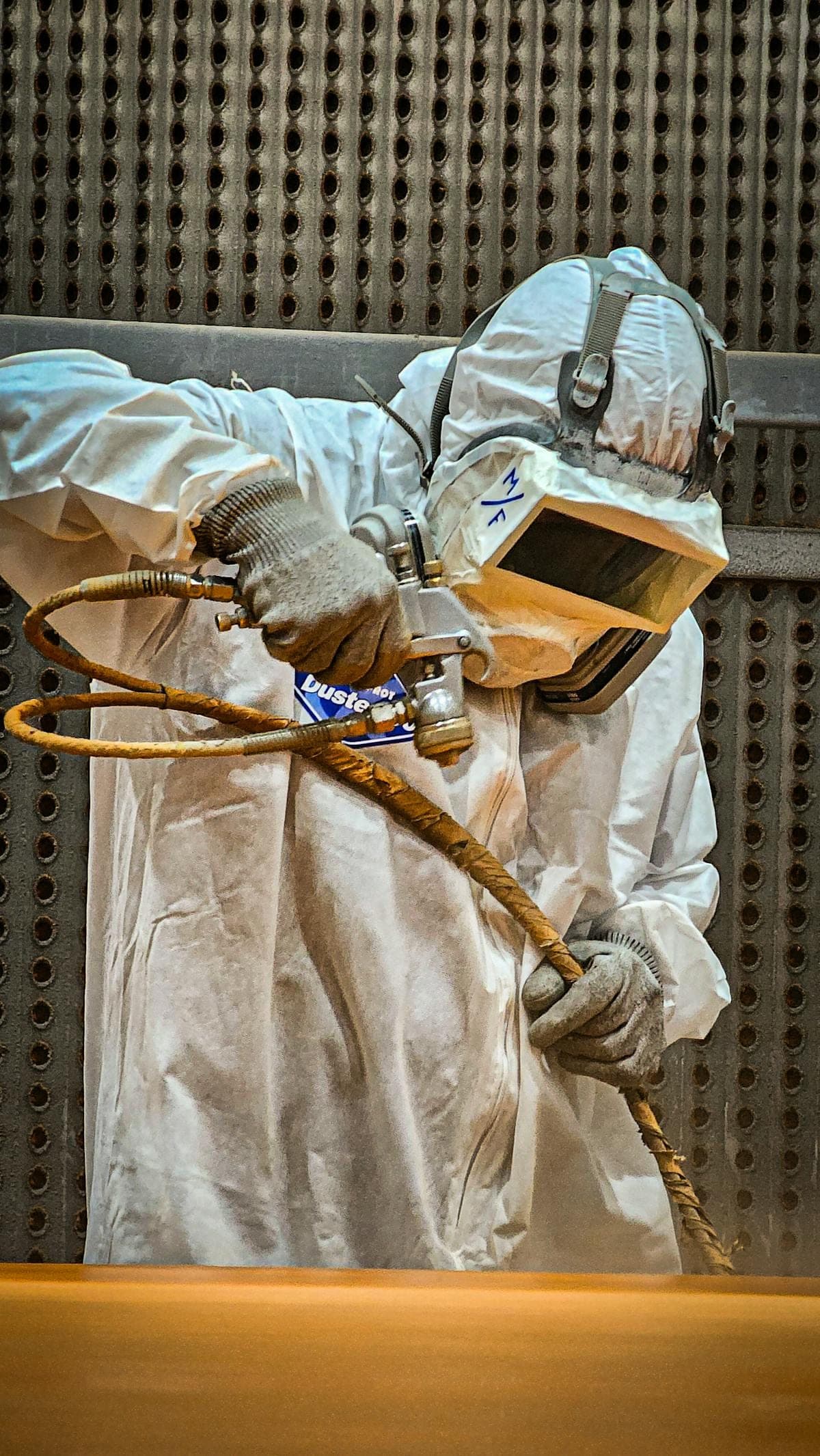
Sandblasting and Corrosion Protection of Steel: When, Why and to What Standard
Corrosion is not a cosmetic issue but a direct threat to the load-bearing capacity of steel structures, tanks and bridge spans. Unprotected steel on an industrial site always rusts — the only question is how fast. Worse still, even the most expensive paint applied to a poorly prepared surface peels off within 12–18 months, and you are back to the same problem, only more expensive. In this article we explain why the key to protecting steel is not the coating but the surface preparation, what the Sa 2.5–3 standard means, and how sandblasting and corrosion protection are carried out on a working site.
Why protection is cheaper than repair
The aggressive environment of chemical plants, a marine climate or ordinary condensation cut the lifespan of an unprotected structure to 5–7 years. Once corrosion has crept under the old coating, emergency repair costs 3–5 times more than planned treatment: you have to dismantle equipment, shut down the section and sometimes reinforce weakened joints.
So the right logic is not "repaint when it starts leaking" but to prepare the surface and apply protection once and for the long term. A properly engineered corrosion-protection system lasts 10–25 years depending on operating conditions.
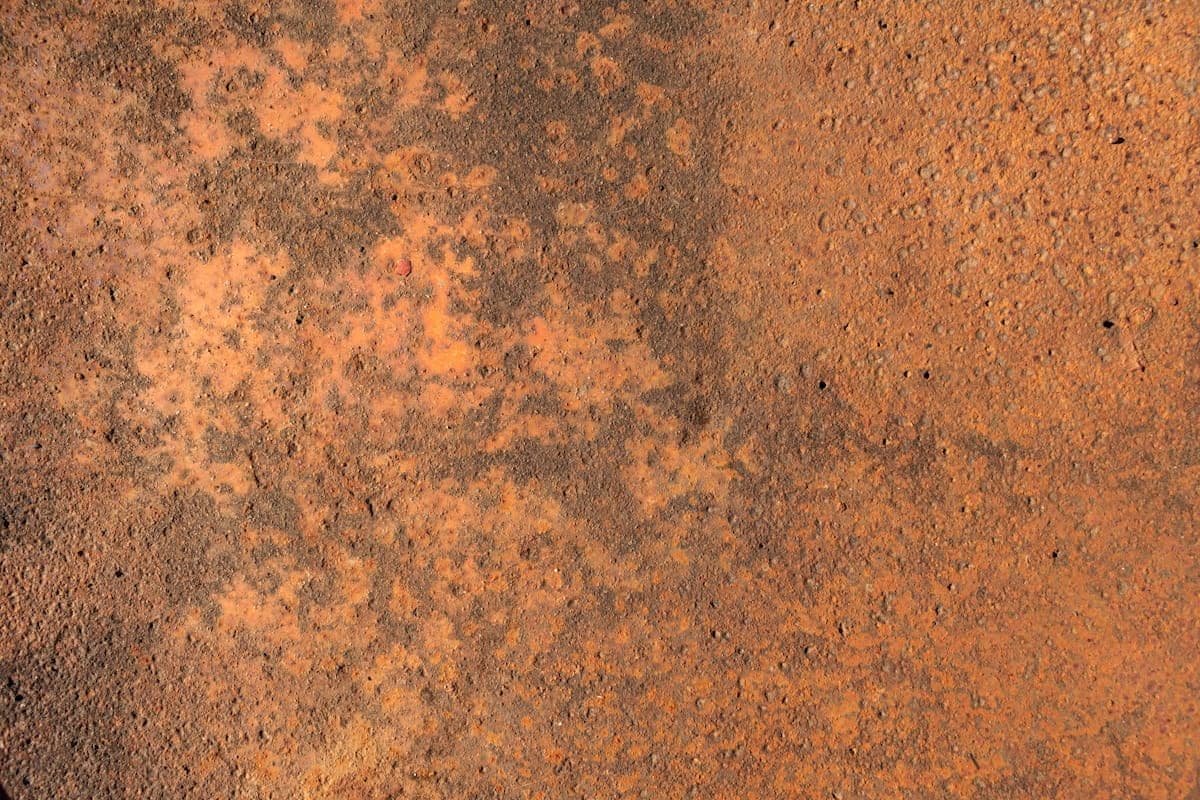
What sandblasting is
Sandblasting (abrasive blasting) is cleaning a surface with a pressurised jet of abrasive. It fully removes rust, mill scale, old paint and contamination, and at the same time creates the required roughness — the micro-profile that the new coating grips onto. Without this step any paint sits on a loose layer of oxide and peels off together with it.
Steel structures, tanks and vessels, bridges, trusses and columns, equipment, as well as concrete and facades can all be treated. For work on operating plants we use enclosed units with abrasive recovery and dust collection — this lets the work proceed without stopping production.
The Sa 2.5–3 grade under ISO 8501: why it matters most
Surface-preparation quality is measured not "by eye" but against the international standard ISO 8501-1. The cleanliness grade is denoted as Sa:
- Sa 2 — the surface is cleaned of the bulk of rust and scale
- Sa 2.5 — near-complete cleaning; only light shadows and stains are allowed
- Sa 3 — cleaning to bare metal with a uniform metallic sheen
For industrial corrosion-protection systems the working standard is Sa 2.5 or Sa 3. It is what delivers coating adhesion above 6 MPa and a roughness of Rz 40–75 µm, optimal for applying primer. If a contractor cannot name the cleanliness grade under ISO 8501, they are not controlling quality — and therefore cannot guarantee the result.
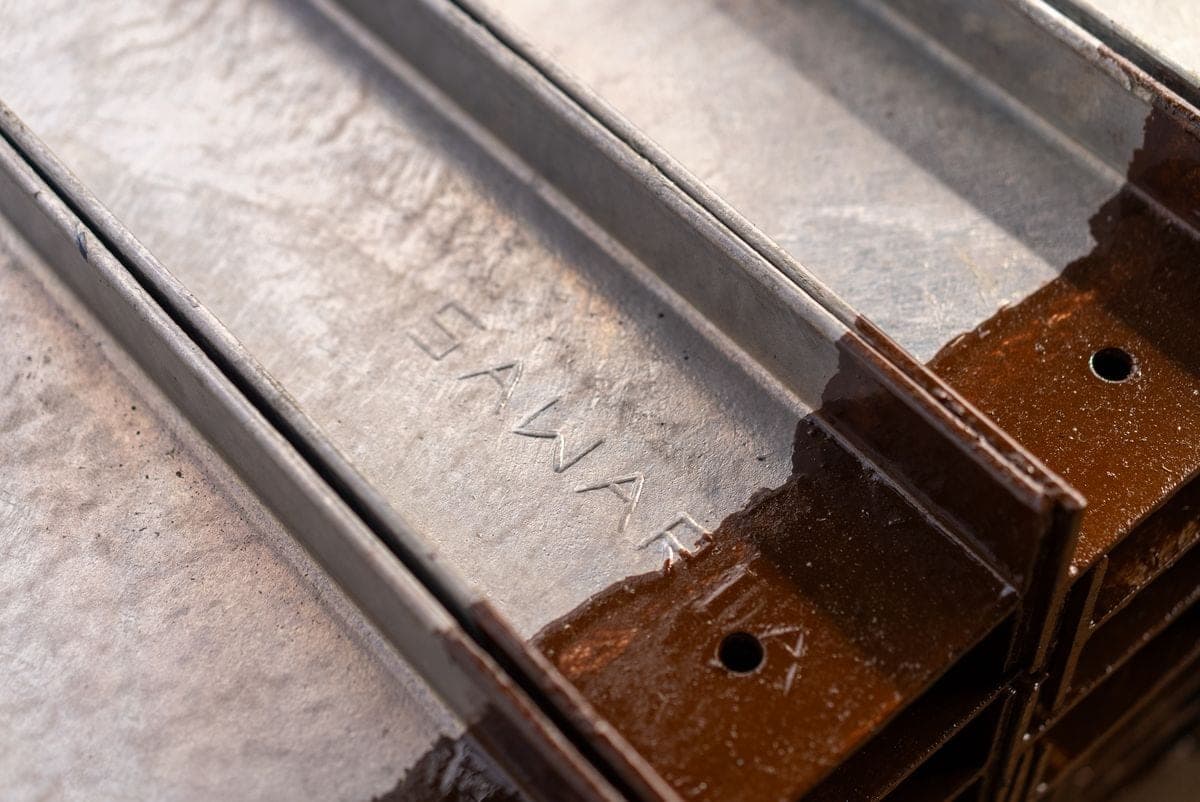
How sandblasting works: five steps
A proper process is not just "blowing sand at it". Every step affects the final quality and the service life of the coating.
1. Inspection and measurement
A technologist visits the site, determines the corrosion grade under ISO 8501-1 (Rust Grade A/B/C/D), measures surface humidity and dew point, and draws up a process chart: abrasive choice, pressure, grit size.
2. Zone preparation and isolation
Protective screens are installed and adjacent structures and equipment are covered from abrasive. On enclosed sites ventilation and dust collection are set up, and personnel work in protective equipment.
3. Abrasive blasting
A working pressure of 6–8 bar, with the abrasive chosen for the material — quartz sand, copper slag, garnet or corundum. The surface is brought to the specified Sa 2.5 or Sa 3 grade.
4. Quality control
The cleanliness grade is checked with a comparator under ISO 8501-1, roughness with a profilometer, and residual dust with tape testing under ISO 8502-3. The results are recorded in an act.
5. First primer coat
An epoxy or zinc-rich primer is applied within a maximum of 4 hours after cleaning — before flash rust appears. This is critical to preserving the result of the preparation.
Corrosion protection: what comes after cleaning
Cleaning is only half the job. Next comes corrosion protection: a coating system selected under ISO 12944 for the corrosivity category of the environment (C3, C4, C5-I, C5-M, CX). This may be cold galvanising, epoxy or polyurethane coatings, applied layer by layer with dry-film-thickness (DFT) control on every coat. It is the pairing of "correct preparation + correct system" that delivers 10–25 years of service rather than just "paint for a season".
How much sandblasting costs
The exact cost depends on the surface type, degree of contamination, area and accessibility of the site, so we fix the final price after an inspection. The rough ranges are:
- Sandblasting of steel — UAH 200–500 / m²
- Sandblasting of concrete — UAH 150–300 / m²
- Corrosion protection (coating system) — UAH 350–800 / m²
The minimum order area is 50 m². For smaller volumes we calculate the cost individually.
Why TEHMAS
TEHMAS provides mobile sandblasting and corrosion protection across Ukraine — coming to your site and working without stopping production. We work strictly to ISO 8501 and ISO 12944, document the result (before/after photos, a cleaning protocol, an acceptance act) and give a written warranty of 2+ years on the full "cleaning + corrosion protection" cycle.
To find out the cost for your facility, leave a request on the sandblasting page — a technologist will contact you within 24 hours and prepare a ballpark estimate.
FAQ
What is the Sa 2.5 cleanliness grade and why is it needed?
Sa 2.5 is near-complete cleaning of the surface from rust and scale under ISO 8501-1. It is this grade that delivers corrosion-coating adhesion above 6 MPa. Without it, even an expensive coating peels off within a year or so.
Can the work be done without stopping production?
Yes. We use enclosed abrasive-blasting units with abrasive recovery and dust collection and screen off the work zone in sections, so cleaning can be carried out on an operating site.
How much does sandblasting cost?
Roughly: steel — UAH 200–500/m², concrete — UAH 150–300/m², corrosion protection — UAH 350–800/m². The exact price is fixed after a site inspection. The minimum order area is 50 m².
What warranty do you give?
We provide a written warranty of 2+ years on the full cycle of works — cleaning together with corrosion protection. We document the result: before/after photos, a cleaning protocol and an acceptance act.
Do you travel outside Kyiv?
Yes, our equipment is mobile — we travel to sites across Ukraine. Logistics and mobilisation timelines are agreed at the request stage.