
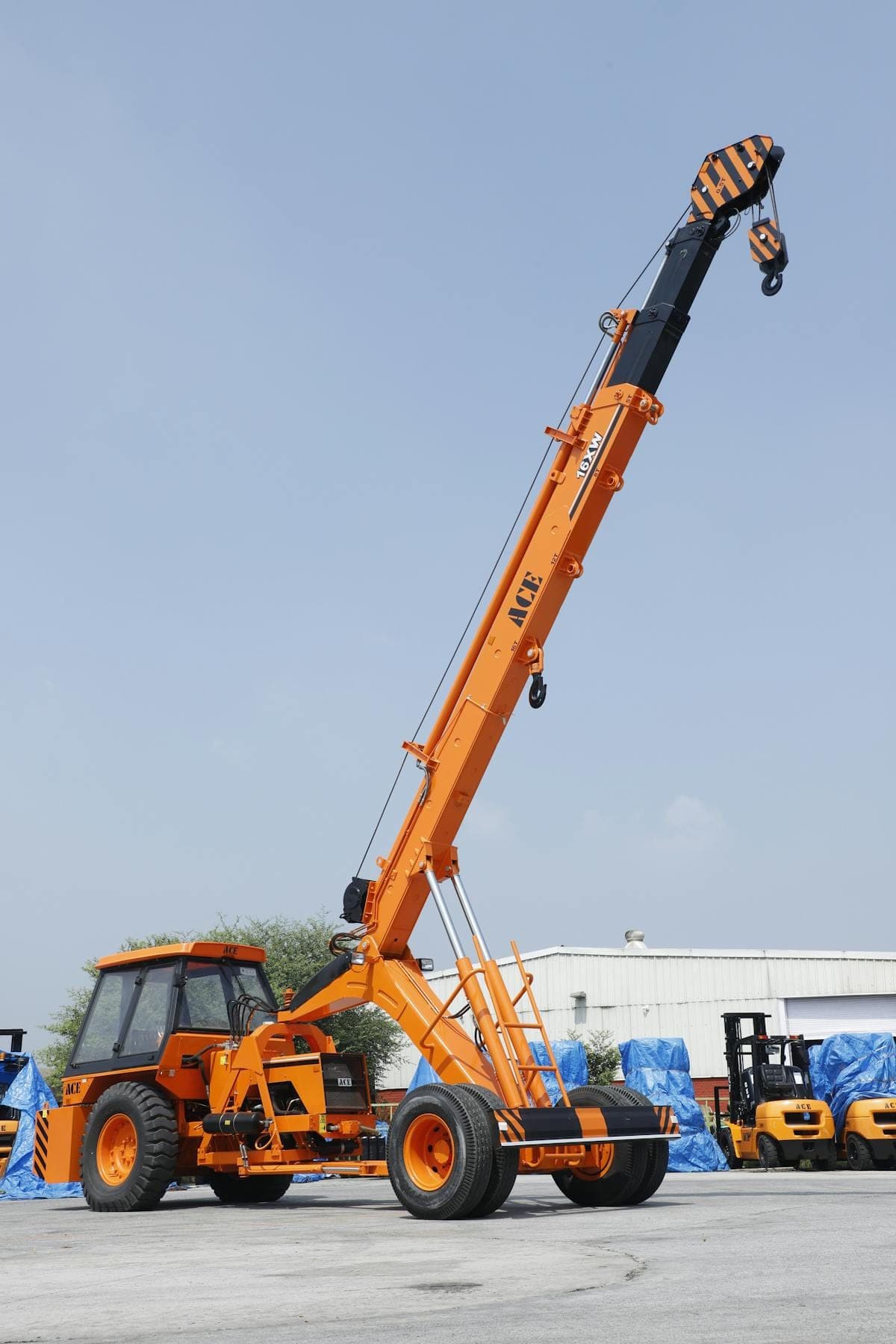
How to Choose a Crane for Your Site: Types, Parameters and Common Mistakes
Choosing a crane is one of those decisions where a mistake is expensive: too little lifting capacity stops the assembly right on site, while an over-powered machine means overpaying for every shift of rental. To pick the right equipment it isn't enough to know the load weight — boom reach, lift height, site conditions and the type of work all matter. In this guide we break down crane types, the five key selection parameters, and the mistakes that most often make clients overpay.
Crane types and when you need each
Mobile (truck) cranes
Cranes on a road or special wheeled chassis are the most common choice for industrial and commercial construction. They arrive under their own power, set up in 20–40 minutes and move between points just as quickly. Capacity ranges from 14 to 500+ tonnes depending on the model. They are optimal for steel-structure assembly, unloading, equipment installation and most tasks on sites with normal access.
Crawler cranes
Running on tracks, they hold large loads and stay stable on weak and uneven ground. They need no outriggers and can travel with a load. The downside: they are delivered to site on a separate low-loader and assembled on the spot, so they pay off on long projects with heavy lifts rather than one-off jobs.
Tower cranes
Stationary cranes for multi-storey and high-rise construction: long reach and lift height on a compact base. They are erected for the whole build period, so for single-storey industrial facilities and warehouses they are usually overkill.
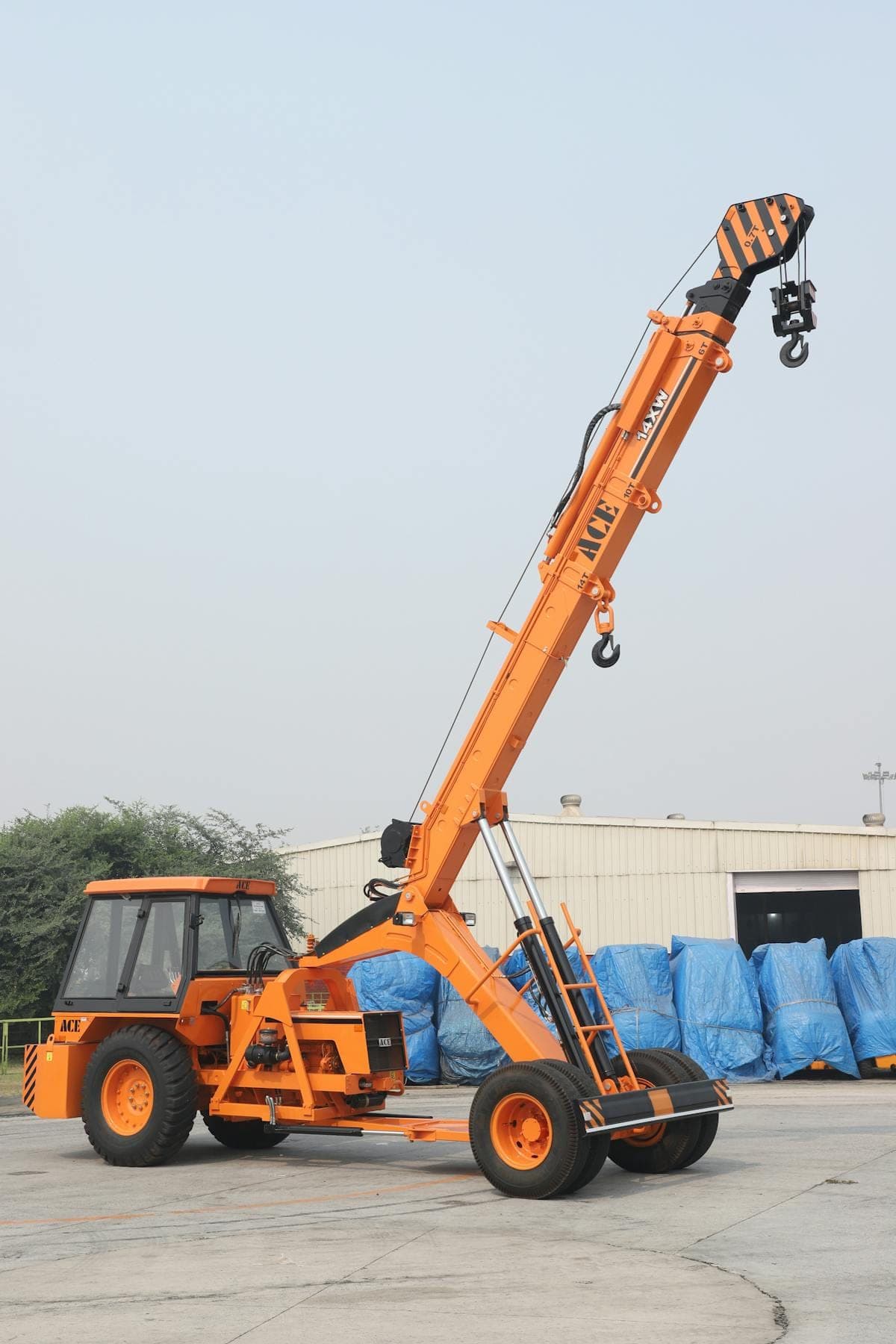
Five parameters used to select a crane
- Load weight. Take the heaviest element, not the average, and add the weight of slings and the spreader beam.
- Lift height. Building height plus a margin for slings and manoeuvring. The hook must rise above the placement point.
- Boom reach. The horizontal distance from the crane's slewing axis to the load. This is the most underestimated parameter (more on it below).
- Site conditions. Ground bearing capacity under the outriggers, room to set up, access roads, power lines and other obstacles.
- Type and duration of work. A one-off unloading, a series of similar lifts or continuous work on site — this drives both the crane type and the rental format.
Why boom reach matters more than it seems
The classic beginner's mistake is to look only at the maximum capacity in the spec sheet. In reality every crane has a load chart: the further from the crane and the higher the load rises, the less it can lift. A "50-tonne" mobile crane will lift those 50 tonnes only at minimum reach right next to itself, while at a reach of 12–15 metres its real capacity can drop several-fold.
So the correct brief is not "lift 5 tonnes" but "lift 5 tonnes to a height of 10 metres at a reach of 14 metres". It is these three figures that determine the machine — and exactly why you should give them to the contractor up front.
Renting a crane with or without an operator
In most cases equipment is rented together with an operator (crane driver) — that is the standard in Ukraine. The advantage is obvious: the contractor takes responsibility for operating the machine, respecting the load chart and safety, and you don't need your own certified crane operator. Renting the "bare" machine is rarer and requires your own qualified personnel.
Common mistakes when choosing a crane
- Focusing only on maximum capacity without accounting for reach and height.
- Skimping on the machine class, which forces you to call in a second crane — more expensive in the end.
- Ignoring site conditions: the crane arrives but there's nowhere to set the outriggers or the access can't take the axle loads.
- Ordering "for tomorrow" with no margin for logistics and permits for work near power lines.
- No brief: the more precisely you describe the load and conditions, the more accurate the selection and the price.
Why TEHMAS
TEHMAS provides mobile cranes for rent with an operator across Kyiv and the Kyiv region. Our own fleet includes the MAZ KS-3577 truck crane (≈14 t) for assembly and unloading work and the HYDROS KS-6472 (≈50 t) for heavier lifts and steel structures. Owning the equipment means your schedule doesn't depend on someone else's rental, and a base 30 minutes from Kyiv cuts logistics and the cost of mobilisation.
Not sure which crane you need for your task? Describe the load, height and site conditions — we'll pick the optimal machine and calculate the cost. You can view the equipment and leave a request on the equipment rental page.
FAQ
Which crane is needed to assemble a warehouse or hangar?
For single-storey industrial facilities and warehouses a mobile crane is usually enough: it arrives quickly, sets up and assembles steel structures. The exact capacity is selected from the weight of the heaviest element, the building height and the boom reach.
Why won't a "50-tonne" crane always lift 50 tonnes?
The maximum capacity applies only at minimum boom reach next to the crane. The further and higher the load rises, the less the crane can lift — this is described by the load chart. That's why it's important to state the weight together with the height and reach.
Is a crane rented with or without an operator?
In Ukraine the standard is rental with an operator. The contractor is responsible for operation, respecting the load chart and safety, so you don't need your own certified crane driver.
What cranes does TEHMAS have?
Our own fleet includes the MAZ KS-3577 truck crane (≈14 t) for assembly and unloading work and the HYDROS KS-6472 (≈50 t) for heavier lifts. We work across Kyiv and the Kyiv region.
What should I specify when ordering a crane?
The weight of the heaviest load, the lift height, the reach (distance from the crane to the placement point) and the site conditions: ground, access, power lines. With this data we will accurately select the machine and calculate the cost.